

Hormones can influence sexual desire, but they’re only part of the picture. BHRT for increasing libido in women may be considered when hormonal changes are contributing to lower desire, and hormone therapy may also help with menopause-related vaginal dryness that makes intimacy uncomfortable. Stress, mood, chronic pain, health conditions, medications, and relationship concerns can also affect sexual interest.
If you’ve lost your sex drive, it can be frustrating when the change feels hard to explain or discuss. Your experience deserves attention, and understanding possible contributing factors is a useful first step toward finding appropriate support.
This article explains how BHRT may affect desire, sexual function, lubrication, and comfort, and why it may not address every cause of low libido. You’ll also learn what a thoughtful assessment may consider, which safety issues matter, and how hormone therapy fits alongside other possible approaches.
Key Takeaways
- Hormone therapy may support desire or ease menopause-related vaginal discomfort when hormonal changes are contributing, but it may not address every cause of low libido.
- Low sexual desire can have hormonal and non-hormonal contributors, so understanding the possible cause helps guide the next step.
- Bioidentical hormone formulations and delivery methods vary; a personalized assessment can help determine what may fit your symptoms and health history.
- Review potential benefits, side effects, and vaginal comfort options with a qualified health professional before choosing a treatment approach.
Can BHRT improve libido and sexual function?
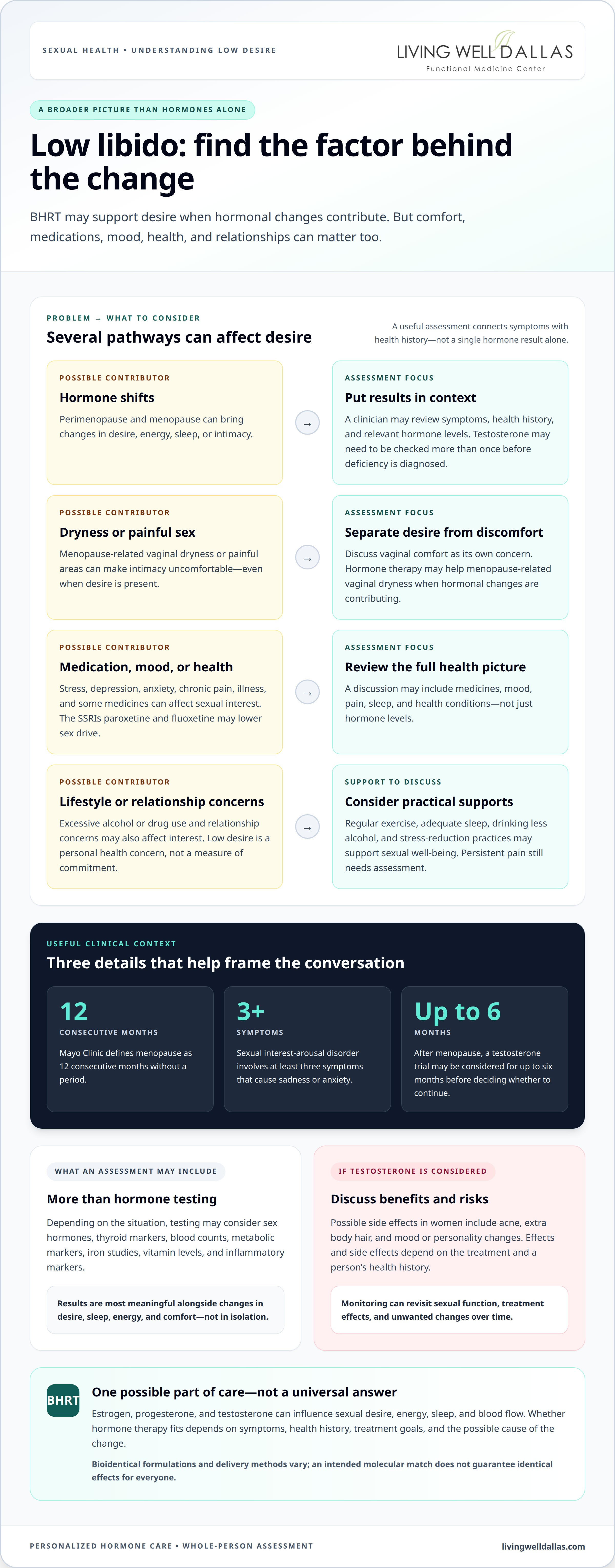
BHRT may help when hormonal changes contribute to lower desire, but it won’t address every cause. Estrogen, progesterone, and testosterone can influence sexual desire, energy, sleep, and blood flow. After menopause, a testosterone trial may be considered for up to six months before deciding whether to continue. Effects and side effects depend on the treatment and a person’s health history.
Mayo Clinic defines menopause as 12 consecutive months without a period. Vaginal dryness and painful areas can make sex uncomfortable, even when desire is present. Other contributors include stress, depression, anxiety, chronic pain, illness, relationship concerns, and excessive alcohol or drug use. Paroxetine and fluoxetine, both SSRIs, may also lower sex drive. A partner’s perspective can matter, but low desire is a personal health concern, not a measure of relationship commitment.
Sexual interest-arousal disorder involves at least three symptoms that cause sadness or anxiety. Symptoms may include reduced interest, less sexual excitement, or fewer sexual thoughts. A clinician can explore these experiences alongside medications, mood, pain, and hormone levels. This can help distinguish reduced desire from discomfort that makes intimacy less appealing.
Lifestyle changes can support sexual well-being alongside care for underlying causes. Regular exercise, adequate sleep, and drinking less alcohol may help. A balanced diet, stress-reduction practices, mindfulness, yoga, or meditation can also support general health. These steps aren’t a substitute for assessing persistent pain or other symptoms.
In the United States, BHRT costs depend on the case and are provided after a quote request; factors include the formulation, testing, and follow-up. Insurance coverage depends on the individual plan and treatment, so coverage for BHRT shouldn’t be assumed. Ask the clinician’s office for billing details related to the planned care.
What Causes Low Libido in Women?
Sexual desire can shift during perimenopause and menopause as hormone levels change. Some women also notice changes in energy, sleep, or intimacy. These symptoms may overlap, so a single hormone result rarely explains the full experience. A treatment plan starts by connecting symptoms with health history and their effects on daily life.
Bioidentical hormones are designed to mimic hormones the body naturally produces. Compounded formulations may come as creams, pills, sprays, vaginal inserts, or gels. Each delivery method differs in how it’s used and where it acts. The appropriate option depends on the hormone being considered, symptoms, medical history, and treatment goals. “Identical” describes the intended molecular match, not a guarantee of identical effects for everyone.
Pellets offer another delivery method. Biote hormone pellets are typically inserted every three to four months, though treatment frequency varies by individual. Their longer interval may suit some treatment plans, while other formulations allow different dosing schedules. The method itself doesn’t establish that low desire stems from hormone imbalance or that a pellet is the right response.
Assessment can include a health history, discussion of symptoms, and hormone testing. For libido concerns, testing may consider sex hormones, thyroid markers, blood counts, metabolic markers, iron studies, vitamin levels, and inflammatory markers when appropriate. Testosterone may need to be checked more than once before deficiency is diagnosed. Results are most meaningful alongside changes in sexual desire, sleep, energy, and comfort, rather than in isolation.
Personalized dosing and monitoring connect those findings to the treatment plan. A clinician can review symptoms and relevant test results over time, then adjust the approach when needed. This helps distinguish a useful response from side effects or an unchanged concern. For support assessing perimenopause symptoms and hormone options, consider personalized hormone care as part of a broader evaluation.
Is BHRT A Safe Treatment Choice for Low Libido?
Safety depends on the hormone, dose, health history, and reason for treatment. A consultation typically reviews symptoms, medical history, and hormone levels before discussing options. The assessment can also consider medications, mood, pain, sleep, and relationship concerns. These details help distinguish a hormone-related change from factors that may be better addressed another way.
Testosterone requires particular care. In women, it can cause acne, extra body hair, or mood and personality changes. No testosterone product is FDA-approved for women in the United States as of October 2026. That makes a clear discussion of potential benefits, side effects, and monitoring important before considering testosterone as part of hormone replacement therapy.
A personalized plan should connect symptoms with test results rather than treating a single number. Testosterone may need to be checked more than once before deficiency is diagnosed. The clinician can review relevant hormone levels and other health findings, then discuss whether bioidentical hormone therapy fits the concern. Follow-up should revisit sexual function, treatment effects, and unwanted changes, with any adjustments considered in light of that review.
What are safer alternatives to BHRT for low libido? The most appropriate alternative depends on the cause. Addressing medication effects, mood concerns, pain, or relationship stress may help without hormone treatment. Adequate sleep, regular exercise, less alcohol, and stress-reduction practices such as mindfulness or yoga can also support sexual well-being.
Other medicines may suit specific situations, but they have their own risks and eligibility limits. Flibanserin and bremelanotide are approved in the United States for low libido before menopause, not after menopause. Flibanserin can cause dizziness, drowsiness, low blood pressure, upset stomach, or fatigue; alcohol can worsen side effects. Bremelanotide can cause nausea, vomiting, flushing, headache, or an injection-site reaction. A medical review helps weigh these effects against the symptoms being treated.
Estrogen, vaginal lubrication, and intercourse comfort
Hormonal changes can affect lubrication and comfort during intimacy, even when desire remains. Understanding which symptoms relate to vaginal changes can clarify which treatments may address them.
Estrogen and Vaginal Lubrication
Estrogen helps maintain vaginal tissue, and falling levels can contribute to dryness and thinning. These changes may make intimacy uncomfortable. Estrogen, progesterone, and testosterone also contribute to blood flow to sexual organs, sleep, energy, and desire. Their effects differ, so improving lubrication doesn’t necessarily restore sexual interest.
Menopause-related genitourinary symptoms can include vaginal dryness and painful sex. Hormone therapy may help ease dryness, with estrogen available as a pill, patch, spray, gel, or vaginal insert. The delivery method matters: vaginal treatment focuses on local symptoms, while other forms affect the body more broadly. The symptoms and health history guide the discussion.
Vaginal Dryness and Painful Intercourse
Vaginal dryness is reduced moisture that can cause friction, irritation, or pain during sex. If discomfort leads you to avoid intimacy, addressing vaginal symptoms may support comfort, even if it doesn’t directly increase desire. Persistent pain deserves attention because dryness isn’t the only possible cause; infection and other conditions can also contribute.
For moderate to serious genitourinary syndrome of menopause, prasterone vaginal inserts are used nightly to ease dryness-related symptoms and painful sex. Ospemifene is taken daily to help ease painful sex symptoms in this condition. Low-dose vaginal estrogen is unlikely to raise breast cancer risk, but estrogen doesn’t improve sexual functioning related to sexual interest-arousal disorder. Treatment choice depends on the symptoms being addressed, not simply the presence of low libido.
Lifestyle measures may support sexual health, but they don’t replace assessment of ongoing pain or irritation. For a focused discussion of menopause-related vaginal symptoms, schedule a care consultation.
Living Well Dallas
Living Well Dallas offers Functional Medicine Consultations and care for Perimenopause & Menopause to help you explore whether hormonal changes may contribute to lower desire or vaginal discomfort. The team considers symptoms and health history as part of the discussion. If hormone therapy is appropriate to consider, Bioidentical Hormone Replacement Therapy may be discussed alongside other relevant factors, rather than treating libido as an isolated concern.
Consider reaching out when changes in desire or comfort persist, affect intimacy, or leave you unsure what may be contributing. Contact Living Well Dallas to discuss your concerns and possible next steps.
Make Your Next Step About Your Goals
Sexual health is personal, and your priorities deserve a clear place in any care conversation. You might want intimacy to feel comfortable again, understand a change in desire, or explore how symptoms affect daily life. Naming the change you most want to address can help focus the discussion.
If you’re considering whether BHRT can increase libido in women, treat it as one possibility to assess, not an expected outcome. The right next step is a conversation that connects your concerns with your health history and treatment options. You can ask how progress would be reviewed and what alternatives may fit your situation.
When you’re ready to discuss your concerns, contact Living Well Dallas. A thoughtful conversation can help you move forward with greater clarity and confidence.
Frequently Asked Questions
I’ve Lost My Sex Drive: Can Hormone Replacement Therapy Help?
Hormone replacement therapy may help if hormonal changes contribute to lower desire or related discomfort. It won’t address every possible cause, so the clinical discussion should also consider medications, mood, pain, sleep, and relationship concerns. For example, if intimacy has become uncomfortable, care may focus on that symptom rather than assuming desire itself is the only issue.
What is BHRT?
BHRT means bioidentical hormone replacement therapy, an approach that uses hormones designed to match those the body naturally produces. The term describes the intended molecular structure, not a specific dose or delivery method. Treatment may use different formulations, and the choice depends on the symptoms being addressed and the person’s health history. The name alone doesn’t establish which option is appropriate.
What are bioidentical hormones?
Bioidentical hormones are designed to have the same molecular structure as hormones made by the body. They may be prepared in formulations such as creams, pills, sprays, vaginal inserts, or gels. These forms aren’t interchangeable in how they’re used. For instance, a vaginal insert targets vaginal symptoms, while hormone cream is a topical skin application for transdermal absorption.
What is BHRT and can it increase libido in women?
BHRT is hormone therapy using bioidentical formulations, and it may be considered when hormonal changes are linked to lower desire. For women exploring BHRT to increase libido, the key question is whether hormones plausibly explain their symptoms. A careful assessment distinguishes desire concerns from pain, medication effects, mood changes, or other health factors that may call for a different approach.
Which hormones are used in BHRT for low female libido?
Estrogen, progesterone, and testosterone may be considered in hormone care, but they don’t serve identical roles. Estrogen can be relevant to menopause-related vaginal symptoms; testosterone may be considered for some postmenopausal women with low desire. No testosterone product is FDA-approved for women in the United States as of October 2026. The selection depends on symptoms, health history, and treatment aims.
What evidence supports testosterone therapy for low sexual desire in women?
For women after menopause, a testosterone trial may be considered for up to six months before deciding whether to continue. That approach doesn’t promise a benefit for every patient. Monitoring matters because testosterone can cause acne, extra body hair, or mood and personality changes.