
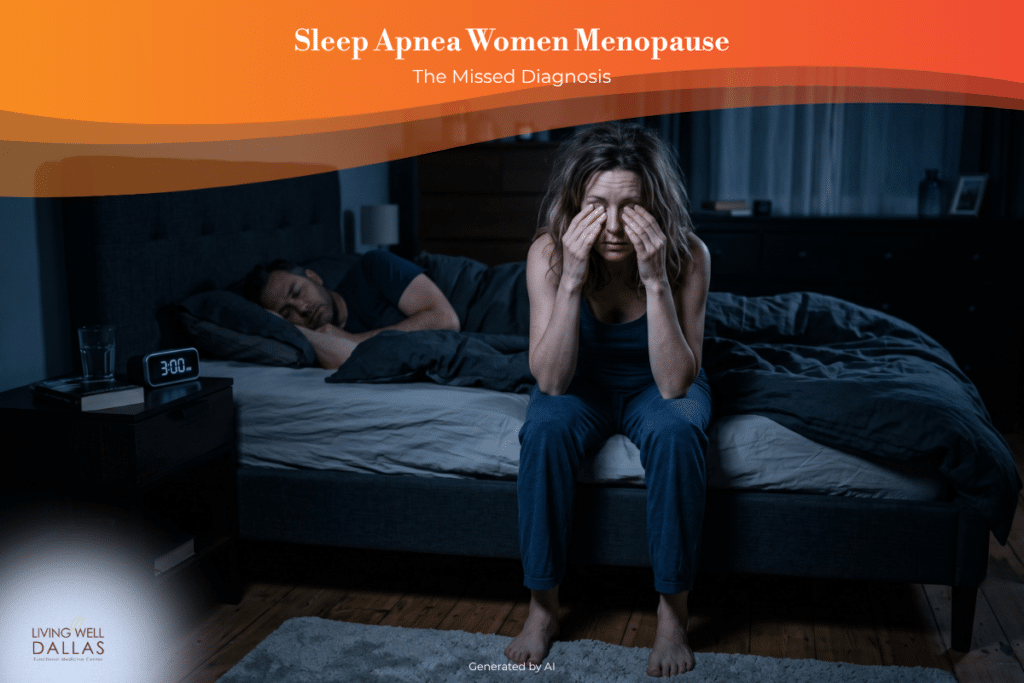
You are exhausted, and everyone has a tidy explanation. It is just menopause. Blame stress. Blame your age. None of it fixes the fact that you wake up feeling like you never slept at all. Here’s the cause nobody names: sleep apnea women menopause makes far more likely, and doctors keep missing it in women like you.
I have this conversation constantly. A woman drags herself in, wrecked, after years of being told she is depressed or just stressed. She sleeps eight hours and wakes up unrefreshed. Nobody thought to check her breathing at night. Because in her mind, and her doctor’s, sleep apnea is a snoring, overweight man’s problem.
That picture is wrong, and it is costing women their health. Up to 75% of women with sleep apnea never get a diagnosis. Translation: three out of four go untreated while the condition quietly strains their heart. And menopause is exactly when the risk climbs.
Sleep Apnea Women Menopause Rarely Get Diagnosed
So why the gap? A 2026 sleep-clinic study in Diagnostics followed 3,736 patients from 2013 to 2023 to see how aging and menopause change obstructive sleep apnea. Here’s what they found: prevalence rises after menopause. The protection younger women get from their hormones fades.
Surgical menopause makes it worse. Women who have both ovaries removed see their sleep apnea risk double. That is a sudden hormone drop, and the airway pays for it.
So the biology is clear. Menopause and the loss of estrogen and progesterone leave women far more vulnerable to a condition most people still picture as male.
What This Looks Like in Practice
Women come to me having been worked up for everything except the real problem. One patient in her late fifties had seen a cardiologist for high blood pressure, a therapist for low mood, and a neurologist for morning headaches. Nobody connected the dots.
Her real issue was fragmented breathing all night, every night. So her blood pressure would not come down. Her mood stayed flat. Her headaches kept coming. One sleep study finally named it, and treatment changed her life.
The Symptoms of Sleep Apnea Women Menopause Actually Show
Here’s the core problem. Doctors screen for the male pattern: loud snoring and falling asleep during the day. Women often show something else entirely.
The symptoms women report look like this: fatigue, insomnia, low mood, anxiety, morning headaches, memory and focus trouble, and waking up to urinate during the night. Translation: the exact complaints that get filed under menopause, stress, or aging. So the screening questions miss the women who need them most.
That mismatch is exactly why sleep apnea women menopause makes so common keeps slipping past the standard screening. The test looks for one picture. Women show another.
Why Ignoring It Is Dangerous
Untreated sleep apnea is not just about feeling tired. It drives up your heart risk. It pushes your blood pressure higher. And it leaves you exhausted in a way no amount of sleep hygiene fixes.
The National Institutes of Health links untreated obstructive sleep apnea to high blood pressure, heart disease, and stroke. So this is not a quality-of-life footnote. This is a heart-health issue hiding behind a fatigue complaint.
At Living Well Dallas Functional Medicine Center, we take midlife fatigue seriously enough to ask about your nights, not just your hormones. Because the woman told she is just stressed deserves someone to check whether she is actually breathing all night.
Key Takeaways
- Up to 75% of women with sleep apnea never get a diagnosis, largely because screening targets the male pattern.
- A 2026 study of 3,736 patients found sleep apnea prevalence rises after menopause as hormone protection fades.
- Surgical menopause after removal of both ovaries doubles the risk of sleep apnea.
- Women show fatigue, insomnia, low mood, anxiety, morning headaches, memory trouble, and nighttime urination rather than loud snoring and daytime sleepiness.
- Sleep apnea women menopause makes more likely responds well to treatment once a sleep study finally names it.
Frequently Asked Questions
How is sleep apnea different in women than men? Men tend to snore loudly and fall asleep during the day. Women more often report fatigue, insomnia, low mood, and morning headaches. So the same condition wears a different face, and the female version gets missed.
Does menopause really increase sleep apnea risk? Yes. A 2026 study found prevalence climbs after menopause as estrogen and progesterone fall. And surgical menopause, when both ovaries come out, doubles the risk outright.
Symptoms and Getting Diagnosed
What symptoms should make me ask about sleep apnea? Watch for waking unrefreshed after a full night, morning headaches, memory or focus trouble, anxiety, and waking to urinate at night. Translation: many symptoms women write off as menopause. So if these stack up, ask directly about a sleep study.
I do not snore. Can I still have sleep apnea? You can. Many women with sleep apnea do not snore in the loud, obvious way. So the absence of snoring does not rule it out, especially after menopause.
Risks and Next Steps
Why is untreated sleep apnea dangerous? Untreated sleep apnea raises your heart risk and pushes blood pressure higher. It also leaves you exhausted no matter how long you stay in bed. So treating it protects your heart, not just your energy.
How do I get tested? Ask your doctor for a sleep study, either in a lab or at home. Bring your full symptom list, not just whether you snore. Because the more complete the picture, the harder you are to dismiss.
Dr. Betty’s Bottom Line
The truth about sleep apnea women menopause makes more common is simple: it is real, and it is treatable. I have watched too many women walk out with antidepressants and blood pressure pills while the real problem went unspoken all night. Sleep apnea in women does not look like the textbook. It looks like exhaustion, low mood, and headaches that no one connects.
Here’s what I want you to hear. Waking up tired after eight hours is not normal, and it is not just menopause. Your hormones shifting can push you into sleep apnea, and surgical menopause can double that risk. So the fatigue you have been told to accept may have a name and a treatment.
Ask the question your doctors have not. Push for the sleep study. Because you deserve to know whether you are actually breathing while you sleep.
In-person care at Living Well Dallas Functional Medicine Center is available for patients in the Dallas area, covering midlife fatigue, sleep review, hormone testing, and a workup that asks about your nights, not just your symptoms on paper. Start at livingwelldallas.com.
Source: 2026 sleep-clinic cohort study in Diagnostics. https://doi.org/10.3390/diagnostics16070983