

Removing the ovaries can cause hormone levels to drop abruptly and menopause symptoms to begin sooner than expected. Surgical menopause hormone therapy in Dallas may involve medication to replace hormones your body no longer produces. The approach depends on your symptoms, health history, and whether your uterus was also removed.
If symptoms such as hot flashes, night sweats, sleep problems, or vaginal dryness are affecting daily life, it makes sense to want clear information about your options. This article explains what hormone therapy is, which symptoms it may address, and how treatment considerations can differ after ovarian removal. You’ll also learn what to discuss when weighing potential benefits and risks, so you can approach care with a clearer understanding of the decisions involved.
Key Takeaways
- In the United States, menopause is defined as 12 consecutive months without a period; ovarian removal can bring on menopause earlier.
- Hormone therapy may help address symptoms such as hot flashes, night sweats, sleep problems, and vaginal dryness.
- Whether treatment uses estrogen alone or includes progestin depends in part on whether the uterus is present.
- A thoughtful care plan weighs symptom relief alongside personal health history, possible risks, and the role of a gynecologist or compounding pharmacy.
What Is Hormone Therapy?
Hormone therapy uses medication to replace hormones the body produces less of during menopause. Options depend partly on symptoms and whether the uterus remains. If you’re considering surgical menopause hormone therapy in Dallas, understanding these differences can help you prepare for a focused care discussion.
Hormone Changes Around Menopause
Perimenopause is the transition when ovarian hormone levels shift, while menopause follows the end of menstrual periods. Estrogen and progesterone production peak in the late 20s and early 30s, then decline from the mid-30s onward. Levels may fluctuate as ovarian function changes before settling lower. In the United States, menopause is defined as 12 consecutive months without a period, according to the National Institute on Aging. This definition helps distinguish the transition from menopause itself.
Estrogen and Progestin Therapy Options
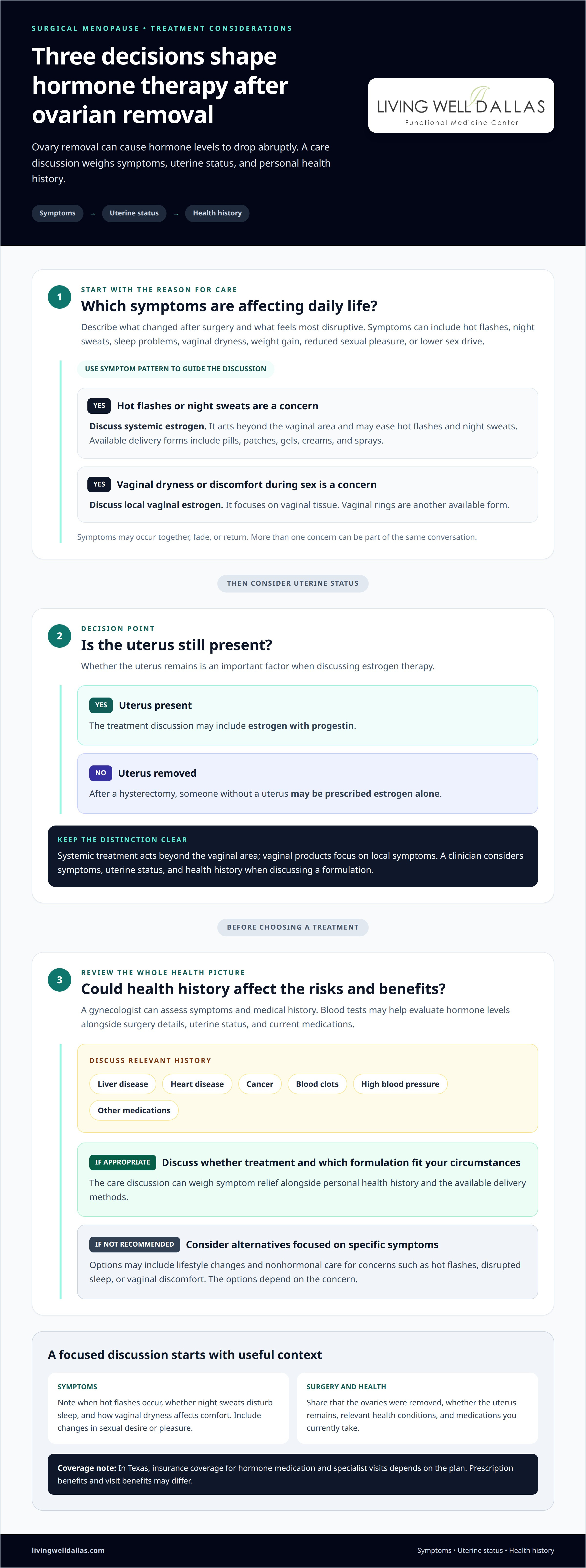
Estrogen therapy uses estrogen alone, while combined therapy pairs estrogen with progestin. After a hysterectomy, someone without a uterus may be prescribed estrogen alone; uterine status is an important part of the treatment discussion. Pills, patches, gels, creams, and sprays can deliver hormones throughout the body. Systemic estrogen may ease hot flashes and night sweats. Vaginal estrogen targets local tissue and may help with vaginal dryness or discomfort during sex. Rings are another available form.
The delivery method matters: systemic treatment acts beyond the vaginal area, while vaginal products focus on local symptoms. A clinician considers symptom patterns, uterine status, and health history when discussing a formulation. For Dallas-area residents, including those in Plano, Frisco, Carrollton, Farmers Branch, Addison, Coppell, and Highland Park, these factors can make a conversation about surgical menopause hormone therapy more specific.
If hormone therapy isn’t recommended, alternatives may include lifestyle changes and nonhormonal care focused on specific symptoms. Options depend on the concern, such as hot flashes, disrupted sleep, or vaginal discomfort. Discussing why therapy may not suit your circumstances can help identify relevant alternatives.
In Texas, insurance coverage for hormone medication and specialist visits depends on the plan and service. Prescription benefits and visit benefits may differ, so a discussion of surgical menopause hormone therapy in Dallas can also include how those separate coverage categories apply to your care.
Menopause symptoms
During perimenopause, changing ovarian hormone levels can coincide with changes in periods, sleep, and temperature regulation. As ovarian function changes, estrogen and progesterone levels decline, while fluctuations can make symptoms vary over time. Symptoms may appear together, fade, or return, making the pattern difficult to interpret.
Perimenopause symptoms can include hot flashes, night sweats, sleep problems, and vaginal dryness. A hot flash may bring a sudden feeling of heat, while night sweats can interrupt sleep. Vaginal dryness may cause discomfort during sexual activity. These examples show how hormonal changes can affect daily life beyond menstrual patterns.
After surgical removal of the ovaries, hormone levels can drop abruptly. Hot flashes and night sweats may occur alongside weight gain, reduced sexual pleasure, or lower sex drive. The timing and combination of symptoms can help describe what changed after surgery. Tell your healthcare professional about the procedure and any symptoms that followed, as this provides useful context for discussing care.
Changes can also involve longer-term health concerns. Women can lose up to 10% of bone mass within five years of menopause. During perimenopause, women lose roughly 1 to 2 percent of collagen each year. These figures make it useful to discuss bone health and physical changes alongside immediate concerns such as disrupted sleep or vaginal discomfort.
Before discussing hormone therapy, note when hot flashes occur, whether night sweats disturb your sleep, and how vaginal dryness affects comfort. Include changes in sexual desire or pleasure, especially if they began after ovarian removal. This helps focus the conversation on the symptoms that matter most to you and the health factors that shape possible care.
Women over 45 who are experiencing menopausal symptoms may benefit from treatments ranging from hormone therapy to lifestyle modifications. With surgical menopause, hormone levels can decrease abruptly and cause hot flashes, night sweats, weight gain, and reduced sexual pleasure and sex drive. These symptoms can be part of the same discussion as choosing among the available approaches. Consider which changes feel most disruptive and whether treatment questions center on hormone therapy or lifestyle modifications, so the conversation stays grounded in the concerns that matter to you.
How a gynecologist and compounding pharmacy may be involved in hormone therapy care
A gynecologist can assess symptoms and medical history when developing a treatment plan, and may consider hormone levels as part of the evaluation. For example, blood tests may help evaluate hormone levels alongside details about ovarian removal, uterine status, and current medications. The aim is to consider your circumstances as a whole, rather than focusing on one symptom alone.
Before considering hormone therapy, discuss health conditions that may affect its risks and benefits. Relevant history can include liver disease, heart disease, cancer, blood clots, or high blood pressure. Other medications matter too. This context supports a careful discussion about whether treatment is appropriate and which formulation may address your symptoms.
Some bioidentical hormone products are prescription medications available through pharmacies. Other products are custom-mixed for individual patients and dispensed through a compounding pharmacy. A compounded prescription can be prepared with a particular dosage and combination, but custom compounding does not mean the medication has FDA approval. Keep this distinction in mind when weighing treatment options.
If you’re considering compounded hormones, discuss the intended ingredients, dosage, and combination with the prescribing clinician. The clinician’s plan and the pharmacy’s preparation are separate parts of care: the clinician determines the prescription, and the pharmacy prepares the medication. Clear communication helps ensure the pharmacy receives the intended formulation and that you understand what has been prescribed.
Bioidentical hormone replacement therapy is one approach to discuss in this setting. A thorough appointment can consider symptoms, surgical history, test results, medical conditions, and other medications together. This provides a grounded basis for discussing available treatments, including whether a compounded option is relevant, rather than assuming a particular pharmacy formulation is suitable.
Hormone therapy for menopause and surgical ovarian removal
Surgical removal of the ovaries can bring on menopause earlier than expected by abruptly changing hormone levels. Surgical menopause hormone therapy in Dallas is a care decision to discuss in light of your symptoms, medical history, and treatment goals.
Surgical Menopause and Ovarian Removal
Surgical menopause occurs when removing the ovaries sharply reduces the hormones they produce. Unlike the gradual hormonal changes associated with natural menopause, symptoms may begin soon after surgery. Hot flashes, night sweats, weight gain, and changes in sexual desire or pleasure can occur. Understanding this connection helps put the effects of ovarian removal into the treatment discussion.
Eligibility After Surgical Menopause
Whether hormone therapy is appropriate depends on your health history, symptoms, and surgical details. A care discussion may cover other medications, whether your uterus remains, and any history of blood clots, stroke, or certain cancers. These details inform the assessment of potential risks and treatment options. Dallas-area patients, including those in Plano, Frisco, Carrollton, Farmers Branch, Addison, Coppell, and Highland Park, can discuss how these factors apply to their circumstances.
Benefits and Risks of Estrogen Therapy
Estrogen therapy may reduce hot flashes and night sweats, and it is also used to help prevent osteoporosis. Potential risks include blood clots, stroke, heart attack, and certain cancers. Benefits and risks should be considered together, with attention to your medical history and the treatment under consideration. A balanced discussion can clarify which symptoms and health concerns matter most.
Starting and Continuing Hormone Therapy
When to start treatment after surgery and how long to continue depend on symptoms, recovery, and health risks. There is no single schedule for everyone. A treatment discussion can consider when symptoms began, why the ovaries were removed, and how your health changes over time. Reviewing these factors supports informed decisions about starting or continuing therapy.
For a discussion of menopause symptoms and treatment options, explore menopause care options.
HRT may improve mood, cognitive function, and bone density, which can help prevent osteoporosis. Possible side effects include vaginal bleeding, nausea, mood swings, breast tenderness, and bloating.
Living Well Dallas: Perimenopause & Menopause
Living Well Dallas provides Perimenopause & Menopause care for people seeking support with symptoms after ovarian removal. If hot flashes, disrupted sleep, or changes in sexual comfort affect daily life, a care discussion can clarify your concerns and explore appropriate options. Bioidentical Hormone Replacement Therapy may be considered in light of your symptoms and health history.
A Functional Medicine Consultation offers a broader setting to discuss how menopause-related changes connect with your overall health. If autoimmune concerns are also part of your health picture, Living Well Dallas provides Autoimmune Support. The next step is to discuss what you’re experiencing and what care may fit your needs.
Contact Living Well Dallas to discuss menopause care.
Make Your Next Care Decision With Clarity
After ovarian removal, care decisions can affect both immediate comfort and longer-term wellbeing. Consider what feeling better would mean in everyday life, whether that’s steadier sleep, greater comfort, or feeling more like yourself. These priorities can help make a care discussion focused and personal.
Choosing surgical menopause hormone therapy in Dallas is not only about considering a medication. It’s also an opportunity to discuss your goals, concerns, and the kind of support that feels right for you. You deserve space to understand the options and take the next step at a pace that feels manageable.
Contact Living Well Dallas to begin a conversation about your care. A thoughtful next step can help you move forward with greater clarity and confidence.
Frequently Asked Questions
What Is Menopause?
Menopause is the end of menstrual cycles, defined in the United States as 12 consecutive months without a period, according to the National Institute on Aging. Surgical removal of both ovaries can bring on menopause before that natural milestone, so symptoms may begin after surgery rather than following a gradual transition. The cause and timing help make the care conversation more specific.
What hormone therapy options are available after ovary removal?
Options can include estrogen alone or estrogen combined with progestin, in forms such as tablets, patches, creams, gels, or sprays. Vaginal estrogen may be considered for symptoms focused in vaginal tissue. Some hormone products differ in delivery: topical skin cream is absorbed transdermally, while pellets release hormones continuously for 3-6 months after placement. The treatment choice depends on the person’s circumstances and goals.
How can a menopause specialist in Dallas help you navigate insurance coverage?
A specialist can clarify the practice’s payment policies and what documentation patients receive. Living Well Dallas does not accept insurance or managed-care policies for office visits, but provides receipts with billing codes for patients who wish to submit claims themselves. Lab coverage is separate: some labs are in-network, while many are cash-pay, and patients may receive an additional bill within a known maximum rate.