

Hormone therapy may improve sleep when menopause-related hot flashes or night sweats keep you awake, but bioidentical hormones for sleep problems aren’t a guaranteed fix. “Bioidentical” describes hormones chemically identical to those produced by the body; the label alone doesn’t show whether therapy is appropriate for your symptoms.
If you’re struggling to fall asleep, waking through the night, or feeling worn down the next day, it makes sense to look for the cause and a lasting way forward. Hormone changes can contribute to sleep disruption during perimenopause and menopause, but sleep problems can have other causes, too.
This article explains what bioidentical hormones are, how hormone therapy may affect sleep, and why it’s useful to distinguish FDA-approved from compounded hormones. You’ll also learn about risks and alternatives, which symptoms and health details matter in an evaluation, and what to discuss with a healthcare professional before deciding on treatment.
Key Takeaways
- Learn how menopause-related symptoms may disrupt sleep and why looking at the broader sleep-wake pattern can help clarify what’s happening.
- Understand what “bioidentical” means and why it’s useful to distinguish FDA-approved hormone products from compounded options.
- Prepare to discuss your symptoms, health history, possible benefits and risks, and non-hormonal approaches with a healthcare professional.
- See how individualized hormone care may fit into a thoughtful plan when sleep problems accompany perimenopause or menopause.
Can hormone replacement therapy really improve sleep quality?
Bioidentical hormones may help with sleep when menopause-related hot flashes or night sweats disrupt rest. Menopause-related hormone therapy may use estrogen, with progesterone often included for people with a uterus.
Estrogen, Hot Flashes, and Night Sweats
Estrogen helps regulate body temperature and influences melatonin, a hormone involved in sleep. As estrogen declines during perimenopause and menopause, hot flashes and night sweats can become more disruptive. The body’s circadian rhythm is a 24-hour cycle that governs the sleep-wake cycle, according to the National Institute of General Medical Sciences. Temperature changes at night can interfere with this rhythm and make uninterrupted rest harder.
Sleep Disruption from Hot Flashes
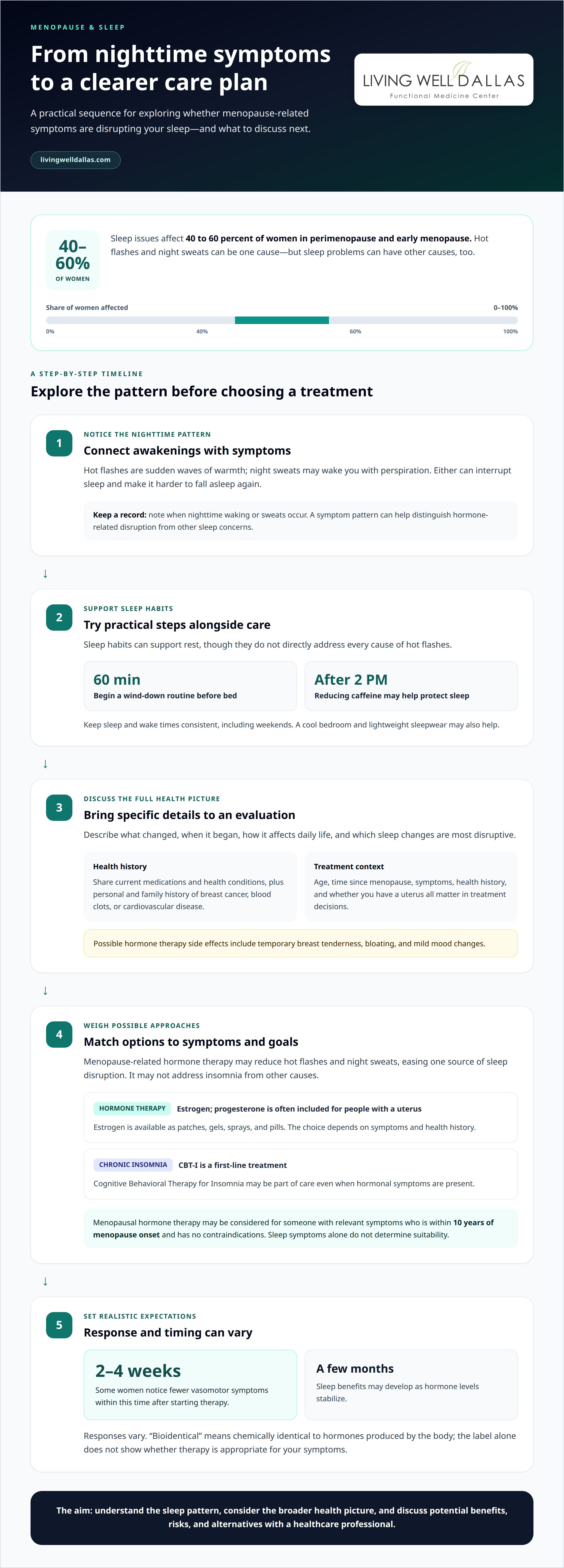
Hot flashes are sudden waves of warmth, while night sweats can wake you with perspiration. Either symptom can interrupt sleep, make it harder to fall asleep again, and contribute to poor sleep the next day. Sleep issues affect 40 to 60 percent of women in perimenopause and early menopause. Noting when nighttime symptoms occur can help distinguish a hormone-related pattern from other sleep concerns.
Hormone Therapy for Nighttime Symptoms
Hormone therapy may reduce hot flashes and night sweats, easing one source of menopause-related sleep disruption. Some women notice fewer vasomotor symptoms within two to four weeks of starting therapy, though responses vary. Estrogen is available as patches, gels, sprays, and pills; progesterone may also be part of treatment. The choice depends on symptoms, health history, and whether the person has a uterus.
Sleep Habits and Hot-Flash Management
Sleep habits can support rest alongside treatment, though they don’t directly address every cause of hot flashes. Keep sleep and wake times consistent, including weekends, and begin a wind-down routine 60 minutes before bed. Reducing caffeine after 2 PM may help protect sleep. A cool bedroom, lightweight sleepwear, and a record of nighttime waking or sweats can also help reveal patterns to discuss with a healthcare professional.
Bioidentical hormone replacement therapy
Bioidentical hormone replacement therapy uses hormones chemically identical to those the body produces. Whether it’s suitable for sleep concerns depends on symptoms, health history, and treatment goals.
Hormone Therapy and Sleep Quality
Hormone replacement therapy may improve sleep quality when hormonal changes cause symptoms such as hot flashes or night sweats. Reducing these disruptions may make it easier to stay asleep. Benefits can develop over a few months as hormone levels stabilize. Insomnia can also have causes unrelated to menopause, so hormone therapy may not address every sleep problem.
Risks and Contraindications
Possible side effects of bioidentical hormone therapy include temporary breast tenderness, bloating, and mild mood changes. An evaluation also considers personal and family history of breast cancer, blood clots, and cardiovascular disease. This context supports a careful discussion of potential risks and whether therapy is appropriate. Share current medications and health conditions, too, as they can affect treatment decisions.
Potential Candidates for Hormone Therapy
Menopausal hormone therapy may be considered for someone with relevant symptoms who is within 10 years of menopause onset and has no contraindications. Age, time since menopause, and medical history all matter; the decision isn’t based on sleep symptoms alone. For chronic insomnia, Cognitive Behavioral Therapy for Insomnia (CBT-I) is a first-line treatment, regardless of the cause. It may be part of care even when hormonal symptoms are present.
Cost and Insurance Coverage
There’s no single cost for bioidentical hormone therapy in the United States. The amount depends on the treatment plan and related care, and is provided after a quote request. Insurance coverage varies by plan and the specific treatment. Before deciding, clarify which parts of care may be covered and what costs apply to your situation. A discussion of individualized hormone care can help connect treatment goals with next steps.
Questions to discuss with a healthcare professional
A useful conversation connects nighttime symptoms with your wider health picture. Describe what has changed, when it began, and how it affects daily life. If you’re considering bioidentical hormones for sleep problems, explain which sleep changes are most disruptive and what you hope treatment might improve.
Sleep, Libido, and Sexual Health
Sleep and sexual health can influence each other. Poor rest may affect desire, while discomfort or changes in libido can add stress around bedtime. During menopause, discuss changes in desire, vaginal comfort, and sleep together rather than treating each concern in isolation. These details help clarify which symptoms matter most and what you hope treatment will address.
Testosterone is also relevant to sleep discussions for men. Testosterone-related changes in slow-wave sleep have been associated with men older than 50. However, testosterone therapy taken too late in the day or at too high a dose can disrupt sleep. Ask how timing and dose relate to your symptoms.
Mood, Mental Health, and Energy
Tell the healthcare professional whether waking at night coincides with anxiety, low mood, or daytime fatigue. These experiences can affect concentration, relationships, and how restored you feel after sleep. People sleeping less than six hours tend to report more negative emotions than those sleeping seven or eight hours. Discussing mood alongside sleep can help create a more complete assessment.
Give specific examples, such as feeling anxious after waking repeatedly or struggling to focus at work. Mention whether symptoms began alongside menopause or followed a change in medication or routine. This context can help distinguish overlapping concerns and identify which outcomes to track during care.
Tests Before Hormone Therapy
Before therapy, an evaluation considers symptoms, age, time since menopause began, and personal and family medical history. Discuss any history of breast cancer, blood clots, or cardiovascular disease. These factors help inform the balance of potential benefits and risks. A sleep complaint alone doesn’t replace this broader review.
Describe your sleep pattern clearly, including trouble falling asleep, waking at night, and next-day effects. Share current treatments and relevant health changes, and ask what further evaluation may fit your situation. A discussion of bioidentical hormones for sleep problems should consider your full symptom pattern, not just one concern.
FDA-approved versus compounded bioidentical hormones
“Bioidentical” describes hormones chemically identical to those produced by the body. The term alone doesn’t tell you whether a particular treatment is FDA-approved or compounded. For sleep issues during perimenopause, focus on the specific product being discussed, its ingredients, and how it relates to your symptoms. A label alone can’t show whether treatment will improve sleep quality or address another cause.
Ask the healthcare professional to identify the specific preparation and explain why it may suit your situation. For example, clarify whether the proposed estrogen is a patch, gel, spray, or pill, and whether progesterone is also part of the plan. Ask how the formulation and dose relate to your symptoms, health history, and treatment goals. These details make comparisons more meaningful than the word “bioidentical.”
Discuss what is known about the specific option, how follow-up will assess your response, and what changes would prompt a review. Track symptoms such as nighttime waking, hot flashes, and daytime energy, then share the pattern. Hormone levels are only part of the picture: stress, other health factors, and lifestyle can also affect sleep. Poorer sleep doesn’t automatically point to one hormone or product.
Before choosing, ask how the preparation is selected, what benefits are expected, and what risks apply to your medical history. Also discuss alternatives, including Cognitive Behavioral Therapy for Insomnia when chronic insomnia is present. A healthy decision weighs symptom relief against safety and the quality of evidence for the specific treatment. For a guided discussion of menopause-related care, explore hormone therapy options as part of your next conversation.
Living Well Dallas: Bioidentical Hormone Replacement Therapy
Living Well Dallas offers Bioidentical Hormone Replacement Therapy for people exploring whether hormonal changes may contribute to sleep disruption. If sleep problems occur alongside perimenopause or menopause symptoms, a conversation can connect your concerns with your health history and treatment goals. Functional Medicine Consultations offer a chance to discuss the broader health picture, including autoimmune concerns that may also affect well-being.
Hormone therapy isn’t the answer to every sleep problem. A thoughtful discussion can clarify whether it’s an option to consider and what questions to raise about benefits, risks, and alternatives. Bring up the symptoms affecting your nights and the changes you hope to see.
If you’d like to discuss your concerns, contact Living Well Dallas.
Make your next conversation count
If you’re considering bioidentical hormones for sleep problems, frame the discussion around what better rest would make possible in your daily life. Think about the changes that matter most, such as feeling more alert, managing daily demands, or having fewer concerns about bedtime. These priorities can keep the conversation focused on your goals, not just a treatment label.
Raise any questions that remain, including how a proposed approach fits your health history and how progress would be assessed. A thoughtful plan should make space for your concerns and leave you clear about the next step. The right direction depends on your circumstances, so an open conversation can help you consider your options carefully.
Contact Living Well Dallas to begin that conversation. A clearer path toward more restorative sleep can start with one honest discussion.
Frequently Asked Questions
What Are Bioidentical Hormones?
Bioidentical hormones are compounds chemically identical to hormones the body produces. The term describes molecular identity, not whether a product is FDA-approved, compounded, or suitable for a particular person. For example, a discussion about estrogen should identify the preparation and its purpose rather than relying on “natural” or “bioidentical” as a complete description. This distinction helps you ask clearer questions about treatment choices.
Is HRT the Right Choice for Your Sleep Problems?
HRT is considered in light of symptoms, health history, age, and time since menopause began. Menopausal hormone therapy may be considered when relevant symptoms occur within 10 years of menopause onset and there are no contraindications. A professional also weighs personal and family history involving breast cancer, blood clots, and cardiovascular disease. In Dallas and nearby Plano, Frisco, Carrollton, Farmers Branch, Addison, Coppell, and Highland Park, Living Well Dallas offers consultations for individualized hormone care.
Shifting Hormones and Insomnia: What’s the Connection?
Hormonal changes can contribute to insomnia, but they aren’t the only possible cause of disrupted sleep. For example, sleep apnea becomes more common during menopause and can interrupt rest through nighttime breathing problems. Mention snoring, gasping, or waking unrefreshed alongside hot flashes or other changes. Describing both the timing and nature of symptoms helps a healthcare professional consider whether sleep disruption has more than one contributor.
What About Compounded “Custom” Hormones?
“Custom” doesn’t tell you enough to compare a compounded hormone with an FDA-approved product. Ask which hormones and dosage form are proposed, why the option fits your symptoms, and what evidence supports its use in your situation. You can also ask how treatment will be reviewed over time. Focus on the specific preparation and your health history rather than assuming a custom label means better results.
What if I cannot or do not want to take HRT?
There are non-hormonal approaches to discuss. Cognitive Behavioral Therapy for Insomnia, or CBT-I, is a first-line treatment for chronic insomnia, regardless of its cause. Non-hormonal prescription medications can also help manage vasomotor symptoms for people who can’t or prefer not to use HRT. These options address different concerns, so describe whether your main difficulty is persistent insomnia, hot flashes, or both.
What is BHRT?
BHRT stands for bioidentical hormone replacement therapy. It refers to hormone replacement using hormones chemically identical to those produced by the body. The acronym alone doesn’t identify the specific hormone, form, or formulation. If a healthcare professional uses the term, ask which treatment they mean and how it relates to your symptoms. That clarification makes it easier to understand the proposed approach and discuss its potential benefits and risks.