

What if the persistent fatigue and mental fog you’ve been battling isn’t just a natural part of aging, but a signal that your body is missing a vital metabolic key? You’ve likely been told your labs are “normal” even though you feel anything but. It’s frustrating to exercise more and eat less only to see the scale climb, while the vibrant energy you once relied on seems to have vanished. We understand that standard medical advice often falls short, which is why understanding the role of testosterone for women is a crucial step in your health journey.
Discover how optimizing this essential hormone can be the catalyst for restoring your vitality, sharpening your focus, and reclaiming your sense of self through a personalized functional medicine approach. This guide will walk you through the systemic importance of testosterone, the latest research on safety, and how we investigate the root cause of your symptoms to build a sustainable path toward long-term wellness. By looking beyond temporary fixes, we can uncover the foundational balance your body needs to thrive again.
Key Takeaways
- Understand why testosterone is a foundational hormone for female biology, influencing everything from your metabolic rate to your cognitive resilience.
- Learn the critical difference between “normal” and “optimal” lab results and why standard reference ranges often fail to address the symptoms of perimenopause.
- Discover the multi-faceted benefits of testosterone for women, including restored sexual health, improved muscle tone, and a significant reduction in persistent brain fog.
- Explore the various delivery methods, such as bioidentical creams and precision pellets, to determine which protocol best aligns with your unique lifestyle and physiological needs.
- See how a functional medicine consultation uses specialized genomics and methylation testing to create a safe, data-driven hormone restoration plan tailored specifically to you.
Table of Contents
- Beyond the “Male Hormone” Myth: Why Women Need Testosterone
- The Functional Medicine Approach: “Normal” vs. “Optimal” Lab Levels
- Benefits and Risks: What Testosterone Therapy Can (and Can’t) Do
- Delivery Methods and Protocols: Pellets, Creams, and Gels
- Personalized Hormone Restoration at Living Well Dallas
Beyond the “Male Hormone” Myth: Why Women Need Testosterone
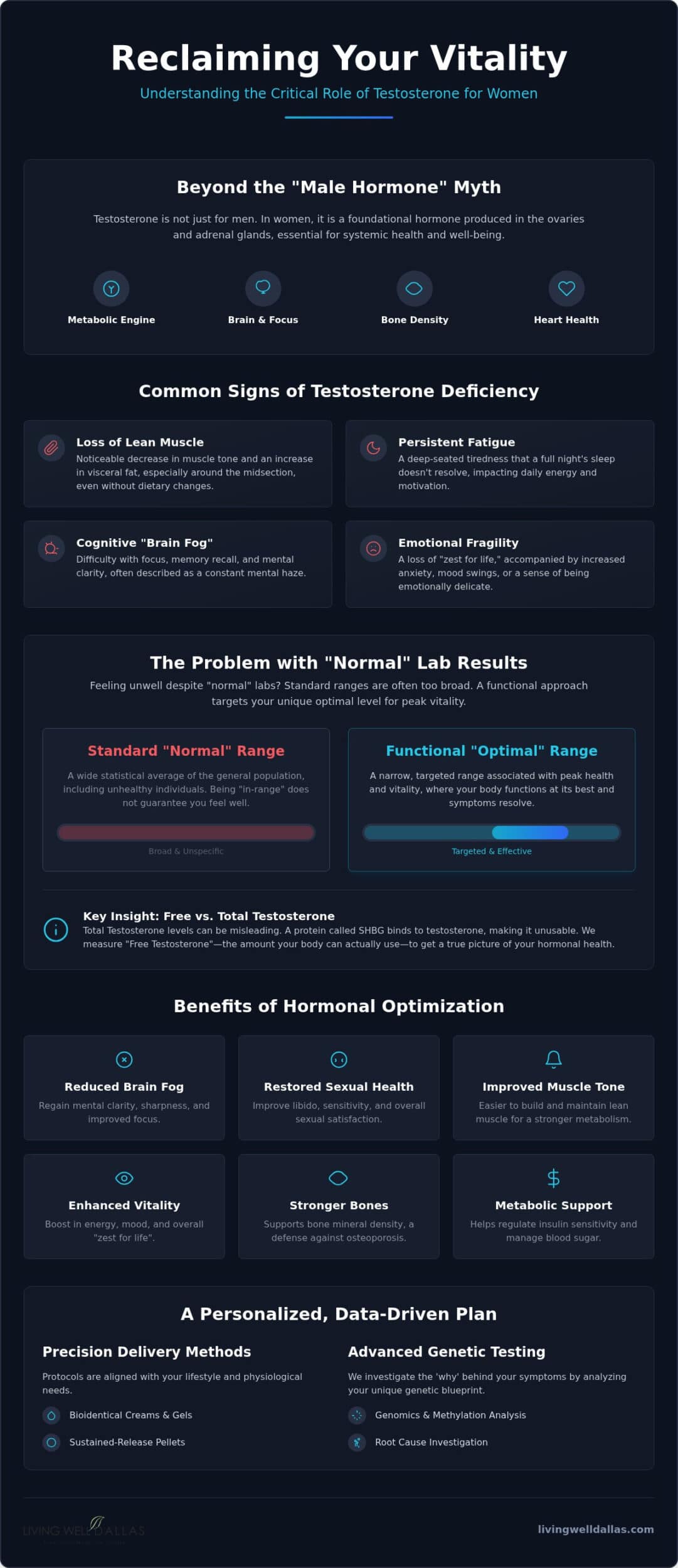
For too long, we’ve viewed testosterone through a narrow, male-centric lens. In reality, women produce this hormone in their ovaries and adrenal glands, and it plays a vital role in systemic health. When levels begin to decline, often starting in your late 30s or early 40s during perimenopause, the impact is felt far beyond the bedroom. While much of the conversation around Androgen replacement therapy focuses on sexual desire, testosterone for women is actually essential for maintaining bone mineral density. It works alongside estrogen to stimulate bone-building cells, acting as a natural defense against the onset of osteoporosis as you age. It’s a foundational hormone that supports your heart, your brain, and your metabolic engine.
The Symptoms of Testosterone Deficiency in Women
Low levels often manifest as “silent symptoms” that are easily dismissed as stress or simple aging. Physically, you might notice your clothes fitting differently even if your diet hasn’t changed. This is because a deficiency often leads to a loss of lean muscle and an increase in visceral fat around the midsection. You might also experience persistent fatigue that even a full night’s sleep won’t resolve. Cognitively, many women describe a persistent “brain fog” that makes it difficult to focus or recall names. Emotionally, the shift can be profound. You might feel a loss of your usual “zest for life,” accompanied by increased anxiety or a sense of emotional fragility that wasn’t there before.
Testosterone and Your Metabolic Health
Your metabolic health is deeply intertwined with your hormonal balance. Testosterone helps your body manage insulin sensitivity and regulate blood sugar more effectively. This becomes especially critical as you move into your 50s, when maintaining a healthy weight feels like an uphill battle. Without adequate levels, your body struggles to partition nutrients toward muscle and away from fat storage. Testosterone creates a vital synergy with lean muscle mass, ensuring your metabolism remains efficient while providing the structural support your body needs to stay active. Optimizing testosterone for women isn’t just about feeling better in the moment; it’s about protecting your long-term metabolic vitality and preventing the “middle-age spread” that often accompanies hormonal decline.
The Functional Medicine Approach: “Normal” vs. “Optimal” Lab Levels
Many women hear their results are “normal” while still suffering from persistent brain fog and fatigue. This happens because standard reference ranges are often too broad, capturing a statistical average of the population rather than a target for peak vitality. These ranges include people of all ages and health statuses, which means being “in range” doesn’t necessarily mean you’re healthy. In a functional medicine consultation, we look for “optimal” ranges. These are the specific levels where your body functions at its best, allowing you to feel vibrant and clear-headed again.
It’s not just about the total amount of testosterone for women circulating in your system. We must distinguish between Total Testosterone and Free Testosterone. Your total level represents the entire reservoir, but not all of it is usable. Sex Hormone Binding Globulin (SHBG) acts like a sponge, binding to hormones and making them unavailable for your cells to use. If your SHBG is too high, your total levels might look fine on a standard test, but your “free” or usable testosterone is actually deficient. We prioritize measuring the free fraction to understand what your body can actually access.
At Living Well Dallas, we don’t just look at the number on the page. We investigate the “why” behind the decline. Is your body struggling to produce hormones due to stress, or is an underlying metabolic issue preventing proper utilization? Understanding this nuance allows us to create a path forward that addresses the root cause rather than just masking symptoms. If you’re ready to look deeper into your health, a functional medicine consultation can provide the clarity you’ve been seeking.
Advanced Testing: Genomics and Methylation
Your unique genetic blueprint dictates how you metabolize hormones. We utilize specialized methylation and genomics testing to see how your body processes and clears testosterone. For example, variants in the MTHFR gene can impact your detoxification pathways, making it harder for your body to maintain balance. By testing estrogen and progesterone alongside testosterone, we ensure your entire hormonal system stays in harmony. Using genomics helps us predict and prevent potential side effects, ensuring your protocol is as safe as it is effective.
The Estrobolome and Gut Health Connection
True hormonal balance is impossible without a healthy digestive system. The estrobolome, a collection of bacteria in the gut, is responsible for metabolizing and excreting used hormones. If your gut is imbalanced, your body might recycle old hormones back into your bloodstream, leading to systemic congestion and worsening symptoms. Implementing targeted Gut Health Protocols is often a necessary step to ensure your hormone restoration is successful and sustainable for the long term.
Benefits and Risks: What Testosterone Therapy Can (and Can’t) Do
When we discuss testosterone for women, the conversation often shifts immediately to libido. While restored sexual desire is a significant benefit, the systemic impact of optimization is much broader. You can expect a noticeable shift in your daily energy levels and a lifting of the mental fog that often makes simple tasks feel overwhelming. Beyond the cognitive boost, testosterone is a powerful tool for maintaining lean muscle mass. This isn’t about “bulking up” but rather about preserving the structural integrity of your body and supporting a healthy metabolic rate as your natural production slows down.
The fear of “masculinization” is a common hurdle for many women considering therapy. It’s important to understand that unwanted side effects like a deepened voice or excessive hair growth are almost always the result of supra-physiological dosing, often seen in synthetic or unregulated protocols. By using bioidentical hormone replacement therapy (BHRT), we mirror the body’s natural molecular structure. Recent shifts in the medical landscape reflect this safety profile. In January 2026, the FDA removed the “black box” warning from many hormone therapies, acknowledging that appropriately prescribed treatment is safer than previously suggested. Furthermore, research continues to highlight the heart benefits of testosterone, as it helps maintain the elasticity of blood vessels and supports overall heart health.
Potential Side Effects and How to Mitigate Them
While BHRT is designed to be gentle, your body may need time to adjust. Some women notice minor skin changes, such as increased oiliness or occasional acne, during the initial phase. This happens because testosterone can interact with the sebaceous glands. We also monitor the DHT (dihydrotestosterone) pathway closely. If your body converts too much testosterone into DHT, it can lead to temporary hair thinning. We prevent these issues through:
- Frequent Monitoring: Lab work every 3 to 6 months during the first year to ensure levels stay within the “optimal” window.
- Precision Dosing: Adjusting your protocol based on how your body metabolizes the hormone.
- Nutritional Support: Using specific supplements to guide hormone metabolism away from unwanted pathways.
Who is (and isn’t) a Candidate for Therapy?
Your safety is our primary concern, which is why the Dallas consultation process is so thorough. Testosterone therapy isn’t a universal solution. It’s generally avoided for women with active liver disease, untreated heart disease, or a history of certain hormone-sensitive cancers. During our investigation, we review your full medical history and current lab data to ensure you’re a fit for restoration. It’s also vital to set realistic expectations. While some women feel an “energy pop” within weeks, the full benefits for bone density and muscle tone often take three to six months of consistent, optimized therapy to manifest.
Delivery Methods and Protocols: Pellets, Creams, and Gels
Choosing the right delivery method for testosterone for women is just as critical as the dosage itself. Every woman’s body absorbs and processes hormones differently, which is why a “one-size-fits-all” approach often leads to poor results or unnecessary side effects. We work closely with you to determine which protocol aligns with your daily routine and physiological needs. Whether you prefer a daily application or a longer-term solution, the goal remains the same: achieving a steady, physiological balance that restores your vitality without the “roller coaster” effect of fluctuating levels.
Compounded bioidentical creams are a common starting point for many of our patients. These are applied daily to a small area of skin, such as the inner thigh or behind the knee. The primary advantage of a cream is its precision. If we need to make a minor adjustment to your dose based on your symptoms, we can do so easily. For those who find daily application difficult to manage, testosterone pellets offer an alternative. These small, rice-sized implants are placed under the skin during a brief office procedure. They provide a steady, slow release of hormones over three to six months. While they offer unmatched convenience, they lack the immediate dose flexibility that creams provide.
In some specific clinical scenarios, we may recommend injectable testosterone. While more common in male protocols, low-dose injections can be highly effective for women who have difficulty with skin absorption. Regardless of the method, the focus is on foundational health. If you are ready to explore which option is right for you, book a consultation with our team to begin your personalized investigation.
The Case for Bioidentical Hormones (BHRT)
Your body is designed to recognize specific molecular structures. Bioidentical hormones are engineered to be an exact chemical match to the hormones your ovaries and adrenal glands naturally produce. This molecular harmony allows for better receptor binding and typically results in fewer side effects than synthetic alternatives. We partner with specialized pharmacists in Dallas who can create custom formulas, ensuring your therapy is as unique as your genetic blueprint. You can explore the full range of BHRT Benefits to see how this tailored approach supports long-term wellness.
Monitoring Your Progress
Hormone restoration is not a “set it and forget it” process; it requires ongoing partnership and intellectual curiosity. In our functional medicine program, we typically schedule follow-up blood work every three months during the first year of therapy. These check-ins allow us to see how your levels are responding to the chosen delivery method. However, we value your personal history and feedback as much as the clinical data. If your lab numbers are within the optimal range but you still don’t feel like yourself, we will continue to fine-tune your protocol until we reach the desired outcome.
Personalized Hormone Restoration at Living Well Dallas
At Living Well Dallas, our philosophy centers on the belief that you deserve more than a standard 10-minute appointment. We approach testosterone for women as one piece of a complex, interconnected puzzle. Led by Betty Murray, PhD, MS, IFMCP, our team acts as investigators, looking deep into your personal history and biological data to uncover the root cause of your symptoms. We don’t just treat the number on a lab report; we treat the person behind it, acknowledging that your symptoms are real even when traditional tests say otherwise. Our goal is to create a safe haven where you feel heard and supported throughout your entire restoration journey.
Your initial functional medicine consultation is a deep-dive session where we map out your unique health landscape. We’ll review your health journey from the beginning, identifying where the imbalances first started. This level of thoroughness ensures that our hormone protocols are safe, effective, and tailored to your specific metabolism. By integrating functional nutrition counseling, we help you build a physical foundation where your hormones can actually do their job. This holistic restoration is why many women in Plano, Frisco, and Highland Park trust us to guide them through the complexities of midlife health.
A Collaborative Partnership for Your Health
We prioritize your story because we know that your lived experience is just as valuable as your clinical data. Betty Murray’s team understands that hormone restoration is a collaborative process, not a one-way street. We combine your insights with specialized methylation and genomics testing to see exactly how your body will respond to therapy, particularly when optimizing testosterone for women. Our functional nutrition counseling provides the dietary framework needed to support hormone metabolism, ensuring that your body clears hormones safely and efficiently. For women across the DFW area, this means receiving sophisticated, data-driven care that feels deeply personal and patient-centered.
Next Steps: Taking Control of Your Vitality
Ready to move from exhaustion to vitality? The first step is booking a discovery call or an initial consultation through our Dallas office to begin the investigation. To make the most of your visit, we recommend gathering any recent lab results or medical records from the last 12 months. Having this information ready allows us to see the bigger picture and start building your protocol immediately. We’ll work together to map out a clear, structured plan that addresses your unique needs and goals. You don’t have to navigate this transition alone; we’re here to be your wise and collaborative guide on the journey from persistent fatigue back to a life of vibrant energy and mental clarity.
A New Chapter of Vitality and Clarity
You’ve spent long enough feeling like a shadow of your former self, but the path to restoration is clearer than you might think. We’ve explored how testosterone for women is a vital metabolic and cognitive powerhouse that requires a nuanced, individual approach. By moving beyond standard lab ranges and investigating your unique genomics, we can uncover the specific imbalances holding you back from the energy and mental clarity you deserve. This systemic approach ensures that your hormone restoration is safe, effective, and perfectly aligned with your body’s needs.
Led by Dr. Betty Murray, a renowned functional medicine expert, our team has served the Dallas-Fort Worth area for over 20 years. We specialize in creating comprehensive BHRT protocols tailored to your unique genomics and personal history. This isn’t about a temporary fix; it’s about building a foundation for long-term health and systemic balance. You don’t have to navigate these changes alone. We’re here to serve as your collaborative guide, helping you transition from a state of persistent exhaustion to a life of vibrant health. Schedule Your Functional Medicine Consultation in Dallas Today and take the first step toward reclaiming your sense of self.
Frequently Asked Questions
Is testosterone therapy safe for women long-term?
Testosterone therapy is considered safe for long-term use when managed within physiological ranges by a specialist. The FDA updated its stance in January 2026 by removing “black box” warnings from many hormone therapies, reflecting a growing consensus on their safety. We use regular monitoring and advanced testing to ensure your levels stay within a window that supports your heart and bone health without causing systemic stress.
Will taking testosterone make me grow facial hair or change my voice?
You won’t experience voice changes or excessive facial hair if your dosage is tailored to your body’s specific needs. These side effects are typically the result of using high doses intended for men. By using precision-dosed testosterone for women, we target the “sweet spot” where you gain energy and muscle tone without triggering unwanted masculine traits.
How long does it take to see results from testosterone therapy?
Most women begin to notice a shift in their energy and mood within the first four to six weeks of treatment. However, physiological changes like increased bone mineral density and improved muscle composition require more time. You should expect to see the full systemic benefits of your protocol after three to six months of consistent, optimized therapy.
Can I take testosterone if I still have my period?
You can absolutely begin therapy while you are still cycling. Many women experience a significant decline in hormone production during their late 30s and 40s, well before their periods stop. We use advanced testing to time your labs and adjust your protocol so it works in harmony with your natural rhythm rather than overriding it.
What is the difference between synthetic and bioidentical testosterone?
Bioidentical testosterone is an exact molecular match to the hormones your body naturally produces in your ovaries and adrenals. Synthetic hormones have a slightly different chemical structure, which can cause them to bind differently to your receptors. We prefer bioidenticals because your body recognizes and processes them more efficiently, which typically results in a smoother restoration process.
Does testosterone therapy help with menopause-related weight gain?
Testosterone supports metabolic health by improving insulin sensitivity and helping you maintain lean muscle mass. While it isn’t a “weight loss drug,” it makes it much easier to manage your weight by ensuring your metabolism stays active. When combined with functional nutrition, it helps reverse the “middle-age spread” that often accompanies the hormonal shifts of menopause.
Do I need to take estrogen if I am taking testosterone?
Every woman’s needs are different, so you don’t always need to take estrogen alongside testosterone. We look at your entire hormonal landscape to see where the imbalances lie. Some women only need testosterone to resolve their symptoms, while others find that a balanced combination of estrogen, progesterone, and testosterone provides the best results for their long-term vitality.
How do I know if my testosterone levels are “optimal” or just “normal”?
“Normal” levels are based on a statistical average of the general population, which includes people who may not be at their healthiest. “Optimal” levels are the specific ranges where your body functions at its peak. We prioritize these optimal targets to ensure testosterone for women actually resolves symptoms like brain fog and fatigue rather than just keeping you within a broad, generic range.