

Did you know that as many as 51.7% of people diagnosed with Irritable Bowel Syndrome actually test positive for SIBO? It’s incredibly frustrating to hear your labs are “normal” when you’re struggling with unpredictable bloating that makes you want to cancel every social plan. You’ve likely tried every diet from Keto to Low FODMAP, yet the “food babies” and discomfort remain. Understanding your SIBO symptoms through the lens of functional medicine reveals that these issues aren’t just in your head; they’re often a sign of a systemic imbalance rather than just a few bad bacteria.
You deserve to know why your persistent digestive issues won’t go away. A functional medicine approach identifies the root cause for lasting relief. We’re going to look past the surface to see how your gut’s internal “cleaning wave” stalls when hormonal shifts or other hidden triggers interfere. This guide provides a clear roadmap to the three SIBO subtypes. It also maps the specific testing protocols that finally provide the clinical answers you’ve been searching for. Together, we can move from uncertainty toward a structured plan for foundational restoration.
Key Takeaways
- Understand why SIBO occurs when bacteria migrate to the “wrong neighborhood” of the small intestine. This interferes with your ability to absorb vital nutrients.
- Learn how to distinguish between the three gas subtypes of SIBO symptoms. A functional medicine approach explains your specific digestive patterns.
- Discover why structural issues like endometriosis or post-infectious autoimmune responses might be the hidden triggers stalling your gut’s motility.
- Explore the roadmap to recovery using gold-standard breath testing. Comprehensive blood work then reveals systemic imbalances that standard tests often miss.
- See how an investigative partnership can help you move from frustratingly “normal” test results toward a clear, actionable plan for long-term vitality.
Table of Contents
- What is SIBO? Understanding the IBS-SIBO Connection
- The 3 Subtypes of SIBO Symptoms: Hydrogen, Methane, and H2S
- Root Causes: Why Did I Get SIBO in the First Place?
- The Functional Medicine Roadmap to SIBO Testing and Relief
- Personalized Gut Restoration at Living Well Dallas
What is SIBO? Understanding the IBS-SIBO Connection
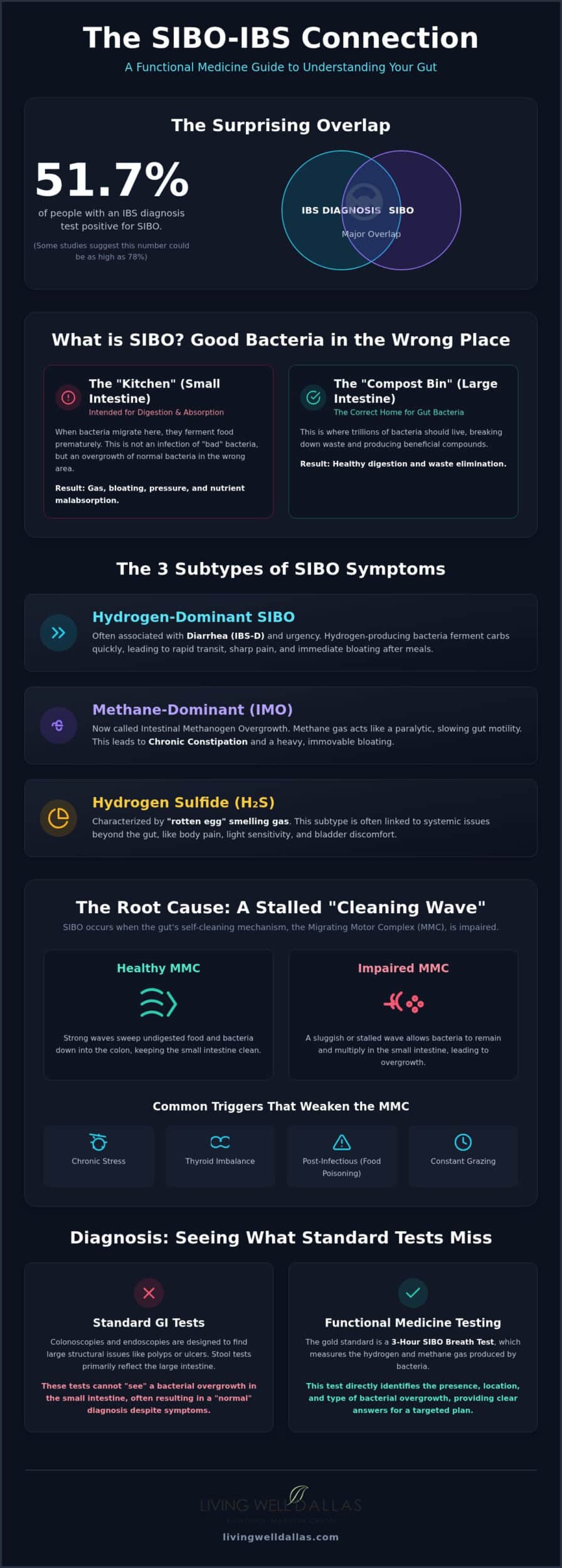
Imagine your digestive system as a carefully organized home. Your large intestine is the compost bin, where trillions of bacteria thrive to break down waste. Your small intestine, however, is the kitchen; it’s a space that must remain relatively clean so you can properly absorb nutrients from your meals. Small intestinal bacterial overgrowth (SIBO) occurs when those “compost” bacteria migrate into the “kitchen.” This isn’t necessarily a case of “bad” bacteria, but rather normal bacteria living in the wrong neighborhood. When these organisms take up residence in the small intestine, they begin fermenting your food. That happens before you can even digest it. This premature fermentation is what leads to the gas, pressure, and distension that characterize common SIBO symptoms.
For years, doctors told many people they simply had Irritable Bowel Syndrome (IBS). Then those patients had to manage the discomfort alone. We now understand that the connection is much deeper than a simple label. Research from 2026 indicates that 51.7% of IBS patients actually test positive for SIBO. Some earlier studies put that number as high as 78%. From a functional medicine perspective, we don’t just see this as an infection to be eradicated with a quick fix. Instead, we view it as a clinical sign that your gut’s internal environment has lost its systemic balance. That imbalance lets an overgrowth take hold.
Why ‘Normal’ GI Tests Miss SIBO
It’s incredibly disheartening to undergo invasive procedures like colonoscopies or endoscopies only for your doctor to say everything looks “normal.” The reality is simpler. These standard tests look for structural issues like polyps or ulcers, or they view the colon lining. They aren’t equipped to identify the bacterial population of the small intestine. Even comprehensive stool tests can be misleading because they primarily reflect the microbial environment of the large intestine. This gap in traditional testing is why you might feel terrible despite having a clean bill of health on paper.
The Role of the Migrating Motor Complex (MMC)
Your gut possesses a built-in cleaning mechanism known as the Migrating Motor Complex. Think of the MMC as the “interstate cleaning crew” that creates waves of muscle contractions to sweep undigested food and bacteria down into the colon. If this crew becomes sluggish, bacteria have the opportunity to crawl upward and colonize the small intestine. Several factors can stall this vital process. Chronic stress, thyroid imbalances, or constant grazing between meals can all do it. Restoring this “cleaning wave” is essential for long-term relief and preventing recurrence.
The 3 Subtypes of SIBO Symptoms: Hydrogen, Methane, and H2S
Not all digestive distress is created equal. When we investigate SIBO symptoms through a functional medicine lens, we’re looking for the specific gas “fingerprint” your gut is producing. Identifying your subtype is the only way to choose a protocol. That protocol targets the actual organisms involved instead of guesswork. Each gas indicates a different microbial environment and requires a unique therapeutic strategy to find lasting relief.
- Hydrogen-Dominant SIBO: This is frequently associated with rapid transit times. If you struggle with urgency or diarrhea (often labeled as IBS-D), hydrogen-producing bacteria are likely the culprits. They ferment carbohydrates quickly, leading to sharp pain and immediate bloating after eating.
- Methane-Dominant (IMO): Now formally called Intestinal Methanogen Overgrowth, this subtype involves organisms called archaea. They produce methane gas, which acts almost like a local anesthetic to the gut. This slows down motility significantly, causing chronic constipation and a “heavy,” immovable type of bloating.
- Hydrogen Sulfide (H2S): This is the most recently identified subtype. It’s often characterized by sulfurous, “rotten egg” flatulence. Beyond the gut, it’s frequently linked to systemic issues like body pain, light sensitivity, and even bladder discomfort.
Systemic SIBO Symptoms Beyond the Gut
SIBO doesn’t stay confined to your digestive tract. When bacteria overgrow in the small intestine, they can damage the delicate mucosal lining, leading to “leaky gut.” This allows undigested food particles and bacterial toxins to enter the bloodstream, triggering systemic inflammation. This is why so many of our patients report brain fog, chronic fatigue, and skin conditions like rosacea. Additionally, these bacteria often “steal” your nutrients before you can absorb them. We frequently see deficiencies in Vitamin B12, Iron, and fat-soluble vitamins like A and D in those with long-term overgrowth.
Hormones and SIBO: The Estrobolome Connection
There is a powerful, bi-directional relationship between your hormones and your gut health. The estrobolome is a collection of bacteria in the gut specifically tasked with metabolizing and clearing estrogen. When SIBO is present, it often disrupts this process. We frequently see a spike in GI issues among perimenopausal women in Dallas because fluctuating estrogen levels directly impact gut motility. Low estrogen can stall the “cleaning wave” we discussed earlier, creating a perfect environment for bacteria to thrive. This creates a vicious cycle where hormonal shifts feed the SIBO, and the SIBO, in turn, prevents healthy hormone clearance. If you suspect your hormones and gut are working against each other, our Functional Medicine Consultations can help uncover the systemic link.
Root Causes: Why Did I Get SIBO in the First Place?
Understanding that SIBO is a symptom rather than a primary diagnosis is the first step toward reclaiming your health. In our practice, we view the presence of these bacteria as a signal that one of your gut’s primary defense or motility mechanisms has failed. By investigating the “why” behind your SIBO symptoms, we build a sustainable path forward. That approach prevents the high recurrence rates, up to 44% within nine months, that traditional care produces. We treat SIBO as an investigative puzzle we solve together, looking for the specific breakdown in your systemic balance.
One of the most frequent triggers we identify is post-infectious SIBO. This occurs after a single episode of food poisoning. The body then makes antibodies that accidentally attack the proteins responsible for gut movement. This “molecular mimicry” effectively breaks the interstate cleaning crew of your gut. Beyond infection, structural physical barriers are a major factor. Adhesions from past abdominal surgeries or endometriosis are particularly common among the patients we see in Dallas. These physical “kinks” in the system create stagnant pockets where bacteria can settle and thrive. Without easing that underlying tension, clearing the overgrowth stays nearly impossible.
We also look closely at your first line of defense: stomach acid. Hypochlorhydria, or low stomach acid, allows bacteria to survive the journey through the stomach and colonize the small intestine. Chronic use of acid blockers (PPIs) often makes this worse. Frequent NSAIDs like ibuprofen can also damage the delicate gut lining. When your natural “disinfectant” is missing, bacteria migrate upward with ease.
Stress and the Vagus Nerve
The vagus nerve serves as the primary communication highway between your brain and your digestive system. Many Dallas professionals live in a state of “sympathetic dominance”, or constant fight-or-flight. That survival mode blocks the signal to digest and move food. When you’re stressed, your body prioritizes survival over the Migrating Motor Complex. Improving vagal tone is a foundational pillar of functional medicine because it restores the neurological command for the gut to sweep itself clean. Without addressing this gut-brain axis, even the best herbal protocols may only provide temporary relief.
Metabolic Health and Blood Sugar
Metabolic health and gut health are inseparable. Insulin resistance and high-sugar diets don’t just impact your energy. They also feed bacterial fermentation and slow GI motility. High blood sugar can lead to a “sticky” environment that favors overgrowth. This is why our team at Living Well Dallas integrates medical weight loss and metabolic support into our gut health protocols. By stabilizing your blood sugar, we remove the “all-you-can-eat buffet” that keeps these bacteria in the wrong neighborhood.
The Functional Medicine Roadmap to SIBO Testing and Relief
Moving from the “why” to the “how” requires a structured, clinical approach that leaves no stone unturned. At its core, a functional medicine strategy for SIBO symptoms isn’t about a one size fits all pill; it’s about a methodical investigation into your unique physiology. We follow a clear, five step roadmap designed to not only clear the overgrowth but to ensure your internal “cleaning crew” stays active for the long term.
- Step 1: The Lactulose Breath Test. This is the gold standard for identifying gas subtypes. Unlike some competitors who overlook the nuances of the 24 hour prep diet, we emphasize its importance to prevent false negatives. This test identifies whether we are dealing with hydrogen, methane, or hydrogen sulfide.
- Step 2: Comprehensive Blood Work. We look for the systemic “ripples” SIBO leaves behind. This includes checking thyroid function (a major driver of motility), Vitamin B12 levels, and inflammatory markers that indicate how your immune system is responding.
- Step 3: Personalized Antimicrobial Protocol. Depending on your test results, we use targeted botanical antimicrobials like berberine and oregano oil, or specialized antibiotics like Rifaximin.
- Step 4: Prokinetic Support. This is the most frequently missed step in traditional care. Prokinetics are agents that help restart the Migrating Motor Complex (MMC), so your gut sweeps bacteria out daily.
- Step 5: Nutrition and Lifestyle. Once we clear the overgrowth, we move beyond restrictive diets. Our goal is to expand your food choices to foster a diverse and resilient microbiome.
If you are ready to stop guessing and start a targeted plan, you can schedule your Functional Medicine Consultations today to begin this investigative process.
Why Probiotics Might Make You Feel Worse
Many patients come to us frustrated because taking a high quality probiotic actually increased their bloating. In the context of SIBO, adding traditional lactobacillus or bifidobacterium can be like adding fuel to a fire that’s already burning in the wrong place. We often utilize soil based organisms (SBOs) instead. These “spore forming” bacteria don’t colonize the small intestine in the same way, making them a much safer choice during the initial clearing phase. Timing is everything; we only reintroduce traditional probiotics once the “neighborhood” has been properly cleaned.
Genomics and Methylation in Gut Health
Your ability to recover from SIBO is also tied to your DNA. Genetic variants such as MTHFR can impact your methylation pathways, which are essential for clearing the toxins produced by dying bacteria (often called a “die off” reaction). If your detox pathways are sluggish, you may feel significantly worse during treatment. At Living Well Dallas, we utilize specialized Methylation & Genomics Testing to personalize your detox support. By understanding your genetic blueprint, we can provide the specific nutrient cofactors your body needs to process inflammation and restore systemic balance.
Personalized Gut Restoration at Living Well Dallas Functional Medicine Center
Living Well Dallas Functional Medicine Center provides a dedicated space for individuals who are tired of being told their labs are “normal” while they struggle with the life-altering reality of SIBO symptoms. Our team, led by Betty Murray, PhD, views your health as an investigative puzzle rather than a simple checklist. We don’t look at the gut in isolation. Instead, we examine how your hormones, metabolic health, and nervous system interact to create the environment where overgrowth persists. This comprehensive functional medicine approach breaks the cycle of chronic bloating. It also hands you a strategy for long-term vitality.
Our collaborative model ensures that you aren’t just another patient on a template. We integrate clinical medicine, functional nutrition, and mental health support to address the systemic roots of your distress. Success stories in our practice often begin with a patient who felt unheard by traditional systems and end with an individual who has regained their social confidence and energy. We’ve seen residents from across the Metroplex move from the frustration of “food babies” to a state of resilient health by finally addressing the “why” behind their digestive struggles. We’re here to provide the stability and answers you’ve been seeking.
What to Expect in Your Consultation
Your journey begins with a deep-dive health history. We take the time to listen to your story, including the subtle details that others might have dismissed. From there, we don’t rely on generic testing packages. We customize your lab orders to your history and current symptoms. Whether you live in Plano, Frisco, or the heart of Dallas, we offer in-person care in the Dallas area. This personalized investigation allows us to uncover the specific methylation patterns or hormonal shifts that are unique to your biology.
Your Path Forward: A Shared Journey
We operate with a “Wise Guide” philosophy. This means our goal isn’t just to provide a protocol, but to empower you with the knowledge of how your body actually works. You’ll leave our sessions with a clear understanding of your roadmap and the confidence to take the next steps toward restoration. We’re committed to thoroughness and intellectual curiosity, ensuring that every stone is turned in your path toward improvement. If you’re ready to move from uncertainty toward a structured plan, you can Schedule your Functional Medicine Consultation at Living Well Dallas to begin your transformation.
Reclaiming Your Vitality and Gut Balance
You’ve lived with the weight of unpredictable bloating and the frustration of “normal” test results for long enough. Recognizing that these issues are a signal of a deeper systemic imbalance is the essential first step toward lasting restoration. By investigating the intersection of gut health, hormones, and your unique genomics, we can move past temporary fixes and focus on long term vitality. When addressing persistent SIBO symptoms, functional medicine provides the investigative framework needed to restore the internal environment that keeps your digestive “cleaning crew” active and resilient.
At Living Well Dallas, we’ve spent over 20 years serving the Dallas-Fort Worth area with specialized gut-hormone protocols. Led by Betty Murray, PhD, IFMCP, our team is dedicated to uncovering the “why” behind your chronic GI distress. You don’t have to navigate this investigative puzzle alone. We’re here to provide the clinical authority and supportive partnership needed to help you return to a life of vibrant health and social confidence.
Take the First Step Toward Gut Relief: Schedule Your Dallas Consultation
Your path to feeling like yourself again is clearly mapped out, and we’re ready to walk it with you.
Frequently Asked Questions
What are the most common SIBO symptoms?
The most frequent signs include significant abdominal distension, often described as “food babies,” along with gas and abdominal pain that typically worsens after meals. Depending on the specific gas subtype involved, you might experience urgent diarrhea or chronic, heavy constipation. These SIBO symptoms often bring systemic issues like brain fog and fatigue. The overgrowth also blocks your body’s ability to absorb essential nutrients.
Can SIBO cause weight gain or difficulty losing weight?
SIBO can indeed make weight management more difficult by triggering systemic inflammation and metabolic dysfunction. Methane producing organisms, in particular, drive a slower transit time and pull more calories from food. When your gut is in a state of chronic imbalance, it can lead to insulin resistance, making it feel nearly impossible to lose weight despite a healthy diet or consistent exercise routine.
SIBO, IBS, and Testing
How is SIBO different from regular IBS?
While IBS is a clinical label for a collection of symptoms, SIBO is a specific, measurable condition where bacteria have colonized the small intestine. Research from 2026 indicates that 51.7% of individuals diagnosed with IBS actually test positive for SIBO. Identifying the overgrowth allows us to move past simple symptom management and address the actual bacterial imbalance that is driving your digestive distress.
Is SIBO testing available in Dallas and Plano?
Yes, we provide comprehensive lactulose breath testing for residents throughout the Dallas, Plano, and Frisco areas. You can complete these tests through convenient at home kits or via our clinic, which allows us to identify your specific gas subtype. This data is essential for creating a personalized protocol. That plan targets the root cause of your discomfort instead of guesswork.
Can SIBO return after treatment, and how do I prevent it?
Recurrence is common, with up to 44% of patients seeing symptoms return within nine months if the underlying cause isn’t addressed. Prevention requires more than just clearing the bacteria; you must restore the Migrating Motor Complex, or the gut’s “cleaning wave.” Using prokinetic support and addressing triggers like chronic stress or low stomach acid is vital for keeping the small intestine clear and healthy.
Diet, Hormones, and Treatment
What is the best diet for SIBO relief?
There isn’t a single “best” diet, but many find temporary relief using the Low FODMAP or Bi Phasic diets. These calm bacterial fermentation for a while. It’s important to remember that while these diets manage symptoms, they don’t usually eradicate the overgrowth on their own. Our goal is to use a therapeutic diet as a bridge toward healing, eventually reintroducing a wide variety of foods to support long term gut diversity.
How do hormones like estrogen affect SIBO symptoms?
Fluctuating estrogen levels directly impact your gut motility and the health of your microbiome. During perimenopause or menopause, a drop in estrogen can lead to a sluggish Migrating Motor Complex, which creates the perfect environment for bacteria to migrate upward. This is why many women notice a significant spike in GI issues during hormonal transitions, requiring a strategy that addresses both systems simultaneously.
Does functional medicine use antibiotics for SIBO?
A functional medicine approach may utilize targeted antibiotics like Rifaximin or potent herbal antimicrobials such as berberine and neem. The choice depends on your specific test results and health history. Unlike traditional models that might only focus on the “kill” phase, we integrate these treatments with gut lining repair and motility support to ensure the entire system returns to a state of balance.